

Latin America
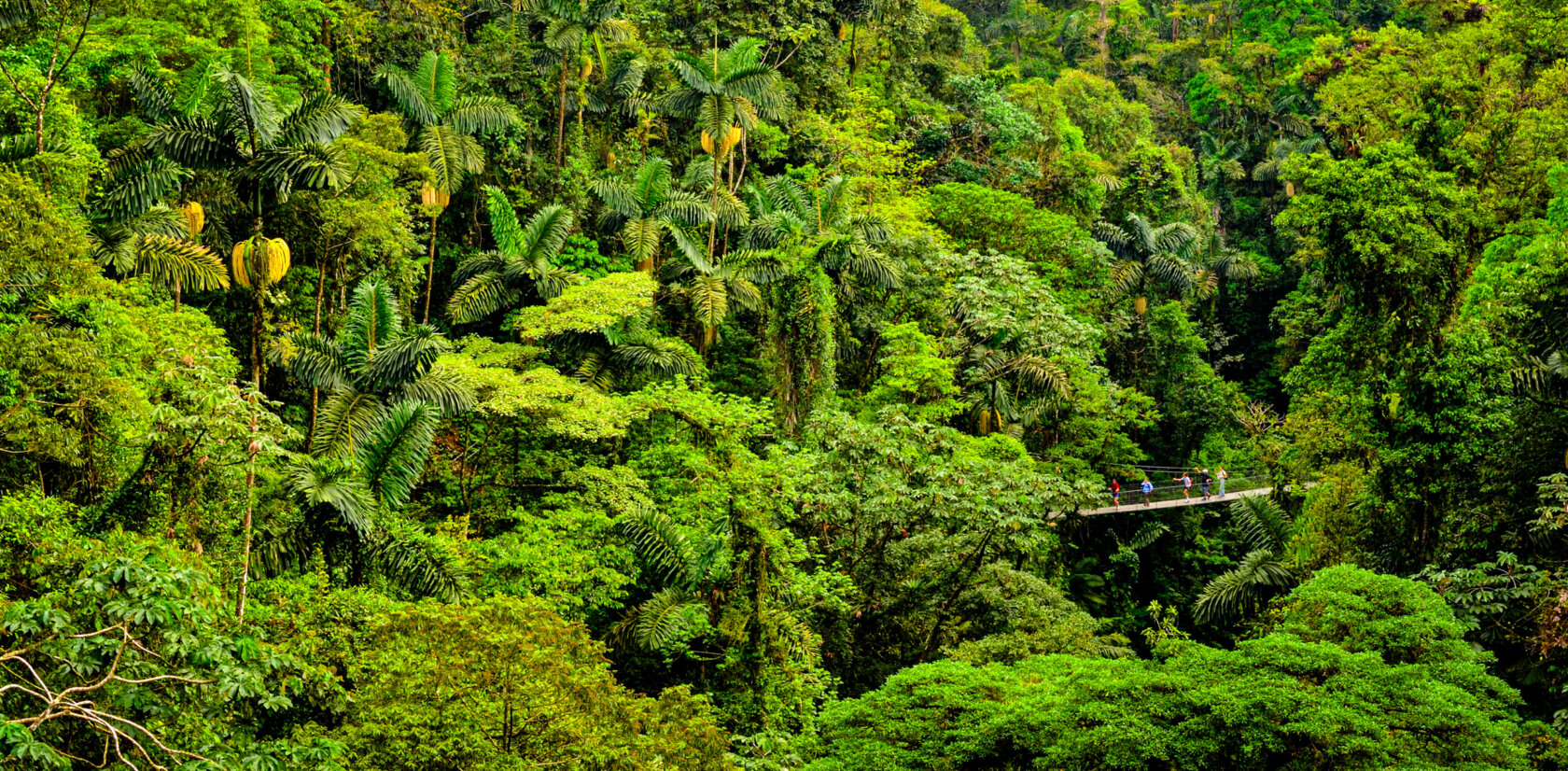
Costa Rica, a sanctuary for wildlife, has around 30 national parks and even more nature reserves. The volume of parks plus their environmental diversity from one another, from the cloud forests of Monteverde Preserve to the volcanic highlands of Arenal to the beaches of Corcovado, can make it difficult to narrow down where to go. With proper planning and the right expertise, Costa Rica’s relatively small size makes it possible to see multiple parks or reserves in one trip. Here are the top five reserves and national parks in Costa Rica to consider when traveling to this biodiversity capital, all of which are featured in WT’s Costa Rica adventure tours.
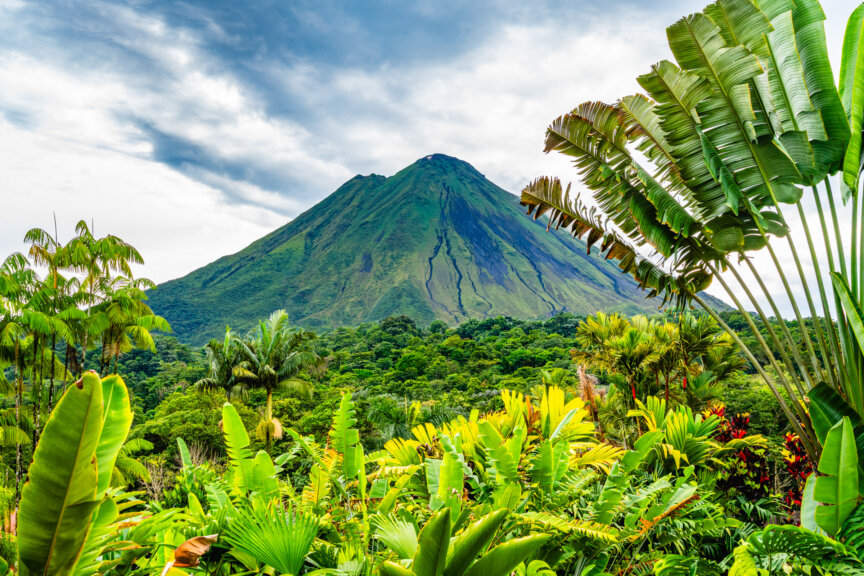
Japan has Mt. Fuji, Italy has Mt. Etna, and Costa Rica has Arenal, famed for its near-perfect symmetrical cone shape set among lush rainforest. Although the Arenal Volcano has been dormant since 2010, it remains one of the country’s most impressive landmarks and a symbol of Costa Rica’s geological history. Not only is the volcano a sight to behold, but the surrounding area of Arenal Volcano National Park is an adventure and wellness playground, filled with networks of hanging bridges, geothermal hot springs, and hiking trails—this makes visiting Arenal one of the best things to do in Costa Rica.
There’s no bad time to visit Arenal Volcano National Park, as each season has its own benefits. The dry season of December through April, one of the best times to go to Costa Rica generally, means more sunny days for hiking and clearer views of the volcano, while the green season of May through November is a great time to enjoy the hot springs.
Costa Rica Wildlife Tour | Costa Rica Private Journey | Costa Rica Family Private Journey
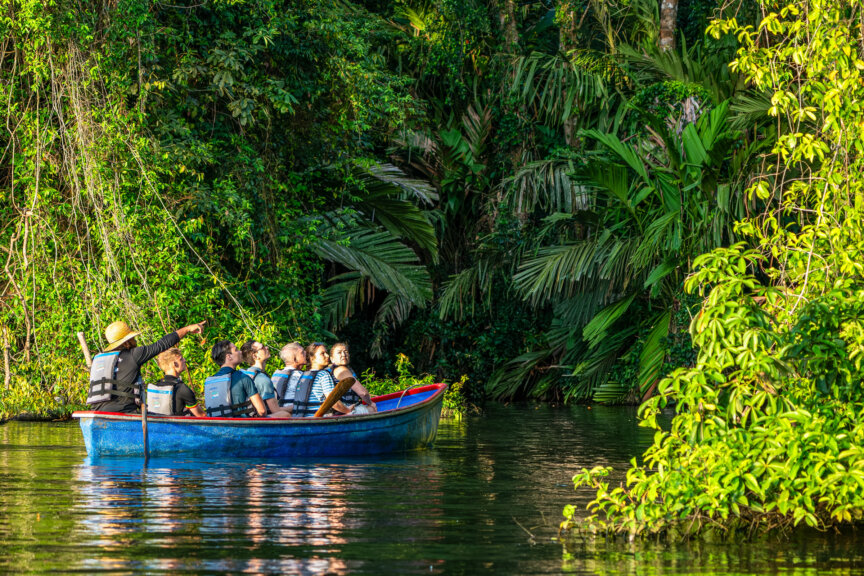
With incredible biodiversity and a vast network of canals, it’s no wonder Tortuguero National Park is commonly referred to as Costa Rica’s “Little Amazon.” Located on the northern Caribbean coast, the 77,000-acre reserve is one of the last large tropical rainforest tracts in Central America. It’s only reachable by boat (or small plane) and best explored by boat or canoe along its extensive canal system, which offers a front-row seat to Tortuguero’s wildlife. While sea turtles, as its name suggests, are one of the highlights of a well-timed visit, they’re just one of a variety of species on display—spectacled caimans, river otters, howler monkeys, sloths, and toucans abound.
Tortuguero National Park is a year-round destination, but seasonal highlights can help narrow your time of visit—turtle nesting season takes place from July to October, the drier months of February to April offer better conditions for hiking, while the green season, from May to January, is when Tortuguero is at its most lush and dramatic.
Costa Rica Wildlife Tour | Costa Rica Private Journey | Costa Rica Family Private Journey
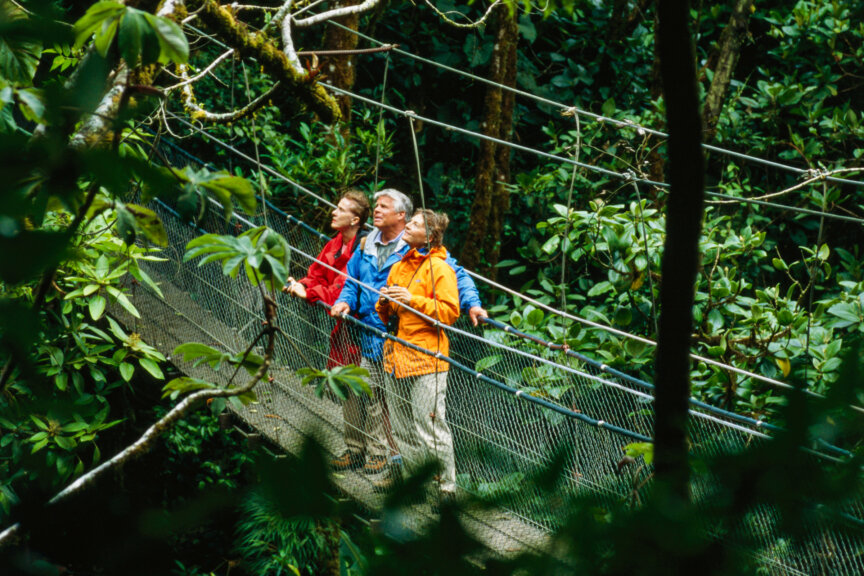
Picture a quintessential rainforest of towering green canopies draped in hanging vines, a veil of mist, and an orchestra of birdsong. This is what Monteverde Cloud Forest Reserve, one of the most important ecosystems in Costa Rica and one of a few hundred cloud forests in the world, looks like. Located in the country’s northwestern Tilarán Mountains, about 100 miles from the capital of San José, Monteverde is home to an extraordinary variety of wildlife, with one tree capable of hosting more plant and animal species than an entire forest in North America. From its network of hanging bridges, you can look for all six of the country’s wildcat species, over 300 types of orchids, and more than 400 bird species, including the resplendent quetzal, one of Central America’s most iconic birds with an iridescent green back and red belly.
Monteverde’s microclimate—characterized by mist and drizzle—is constant throughout the year. This makes Monteverde a year-round destination that’s always lush, whether you visit during the dry or green season. For your best chance at spotting the quetzal, head to Monteverde between February and April, when they breed and nest.
Costa Rica Wildlife Tour | Costa Rica Private Journey | Costa Rica Family Private Journey | Monteverde Cloud Forest Reserve Extension
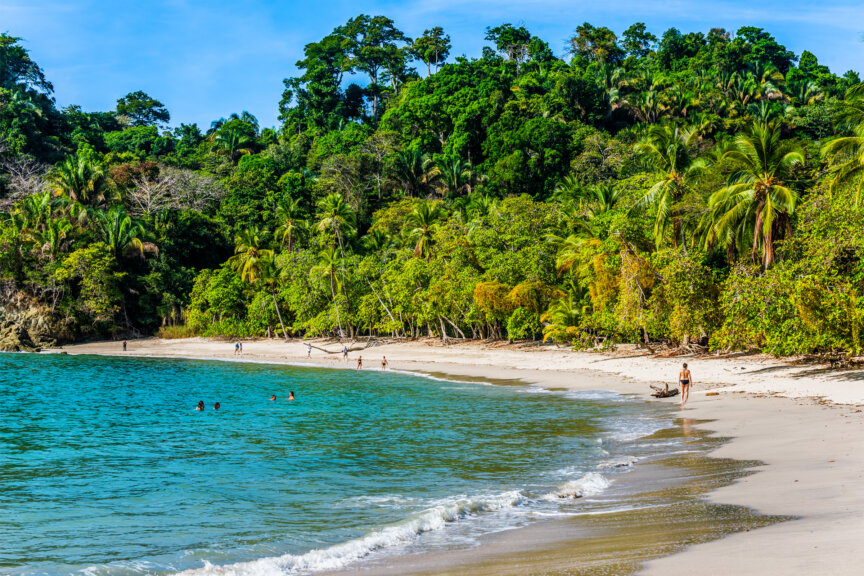
For easy wildlife viewing in a compact coastal setting, look no further than Manuel Antonio National Park. Set on Costa Rica’s stunning Pacific Coast, this 1,688-acre reserve is one of the country’s most biodiverse, full of Costa Rica wildlife like over 100 species of mammals, including three of Costa Rica’s four monkey species, and 350 species of birds, like toucans and motmots. This park stands out for its excellent and easy trail system, density of wildlife, and proximity between rainforest and spectacular beaches.
The best time to visit Manuel Antonio National Park is generally during the dry season, from December to April. This period offers the most reliable sunny weather, calmer seas, and easier hiking conditions. That said, Manuel Antonio is popular year-round, and the green season (May to November) can also be a great time to visit. During these months, the forest is at its most lush and vibrant, and wildlife such as monkeys, sloths, and tropical birds are more active. Rain usually comes in short, heavy bursts in the afternoon, leaving mornings relatively clear for hiking and wildlife spotting. Just be sure to plan around Tuesdays, when the park is closed.
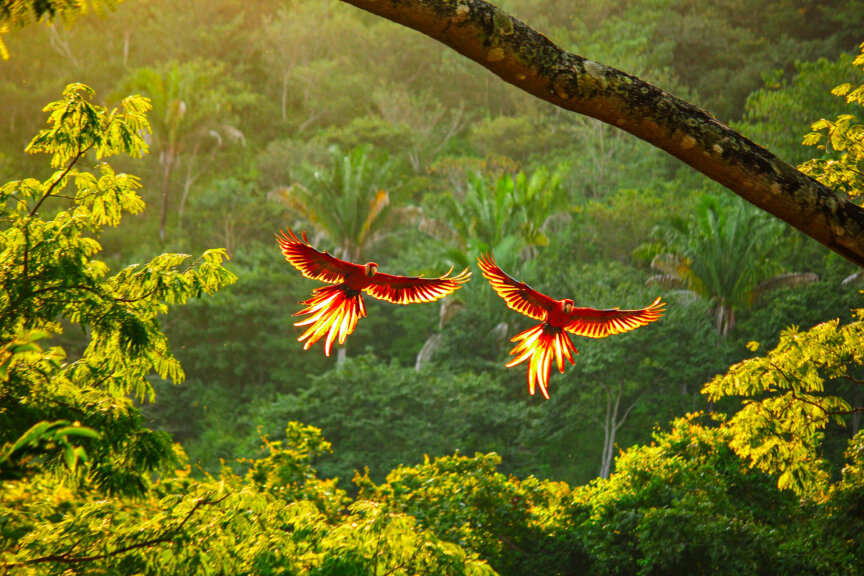
At the southernmost point of Costa Rica’s Pacific coastline is Osa Peninsula, one of the most biologically rich areas in the world. Within the peninsula is Corcovado National Park, one of the largest remaining stretches of primary rainforest in Central America. It is one of the few places where you can still find all four of Costa Rica’s monkey species, as well as tapirs, jaguars, pumas, peccaries, and anteaters. Many of its bird, amphibian, and insect species are classified as rare or endangered. Given its remote location, visiting Corcovado can be challenging; most travel with certified guides via boat or small plane.
The best time to visit Corcovado National Park is during Costa Rica’s dry season, between December and April, when trails are more accessible, river crossings are easier, and boat transfers along the Osa Peninsula are smoother. While it’s possible to visit during the green season, excessive rainfall can result in trail closures.
There are 30 national parks in Costa Rica, managed by the Sistema Nacional de Areas de Conservacion), a department of Costa Rica’s Ministry of Environment and Energy.
Manuel Antonio National Park is the most visited national park in Costa Rica. Other popular parks include Poás Volcano National Park, Arenal Volcano National Park, and Tortuguero National Park.
The best Costa Rican national parks include Tortuguero for its sea turtle viewing and boat rides, Arenal for its hot springs, hiking, and zip lining, and Corcovado for its incredible biodiversity where the rainforest meets the ocean.

Private Journey
Costa Rica Private Journey
Costa Rica
Level 2
8 Days
From $6,895

Cruise Collection
Costa Rica & Panama Expedition Cruise
Costa Rica, Panama
Level 1
13 Days
From $9,075

Small Group Adventure
Costa Rica Wildlife
Costa Rica
Level 2
8 Days
From $7,295

Extension
Corcovado Rainforest Extension
Costa Rica
Level 2+
4 Days
Call for Pricing

Extension
Monteverde Cloud Forest Reserve Extension
Costa Rica
Level 1
4 Days
From $2,395

Extension
Tortuga Lodge Extension
Costa Rica
Level 2
2 Days
From $435

Extension
Pacuare Lodge & River Rafting Extension
Costa Rica
Level 2
3 Days
From $1,995
NEW TRIP

Cruise Collection
Wonders of Costa Rica & Panama Cruise
Costa Rica, Panama
Level 1+
12 Days
From $14,495

Private Journey
Costa Rica Family Private Journey
Costa Rica
Level 2
8 Days
From $5,395
Learn More
Our Latin America Specialists know every detail about our Costa Rica trips. They will be happy to answer any questions and help you choose the journey that’s right for you. Contact us to learn more or book your trip today!