

Kumano Kodo Routes: A Guide to All 6 Pilgrimage Trails

Choosing the Best Kumano Kodo Route for You
The Kumano Kodo is a vast network of ancient pilgrimage trails in the remote, cedar-draped mountains of Japan’s Kii Peninsula—and one of only two pilgrimage routes in the world designated as a UNESCO World Heritage Site.
For more than 1,000 years, emperors, monks, and ordinary people walked these stone-paved paths seeking spiritual renewal at the sacred Kumano Grand Shrines. Today, the trail’s six main routes offer unique and enriching experiences: some follow imperial mountain passes deep into the forest, others trace dramatic coastlines or begin at the hallowed temple complex of Koyasan. Knowing which Kumano Kodo route is right for you depends on your hiking level, how many days you wish to walk, and what kind of pilgrimage you want to experience on your trip to Japan.
Overview of the Kumano Kodo Routes
There are six main routes to choose from depending on your level of fitness, length of days you wish to walk the Kumano Kodo, and your desired accommodations.
Nakahechi Route
The most popular and historically significant route is the Nakahechi Route, which spans from Takijiri-oji to Kumano Hongu Taisha. It’s known as the “Imperial Route” because it was used by emperors and nobles in the 10th century, and is considered the Camino Francés of the Kumano Kodo, meaning it is more traveled and well-marked. This route has a bit of everything, including tranquil scenery, challenging days, and cultural highlights that make it the most popular option. Pilgrims will encounter mountain trails, forested passes, and small villages on their way to Hongu Taisha.
Length: 45 miles
Time: 3-5 days
Iseji Route
The Iseji Route is the eastern approach connecting Ise Grand Shrine to Kumano, and combines coastal and mountain scenery along with beautiful stone-paved sections. Due to urbanization, parts of the route have been lost, but what remains is far less visited than the Nakahechi Route and highlights more cultural aspects of the pilgrimage, making it the perfect complement to the Nakahechi if you want the best of the Kumano Kodo. One of its highlights is the Ise Grand Shrine, the most sacred Shinto site in Japan, dedicated to the sun goddess Amaterasu.
Length: 105 miles
Time: 10-14 days
Ohechi Route
The Ohechi Route, also known as the “coastal route,” was a path taken by everyone, not just monks and emperors. Much like the Iseji Route, it mainly runs along the coast and follows lower-elevation trails, but over the years, much of the route has become developed and urban so it’s not as remote as other options. Travelers are still rewarded with sweeping ocean views and tranquil forested sections. In the past, writers and artists often walked the Ohechi to gain inspiration for their works.
Length: 57 miles
Time: 3-5 days
Kohechi Route
The Kohechi Route is a fantastic, rugged mountain pilgrimage route from Koyasan, featuring steep, challenging ascents/descents and high mountain passes. It is often seen as the best option for experienced hikers, and one of its benefits is that it begins in the mountain town of Koyasan, a UNESCO World Heritage Site home to temples, shukubos (temple stays), and the renowned Okunuin Cemetery, which includes the mausoleum of Kobo Daishi, the founder of Shingon Buddhism.
Length: 42 miles
Time: 4-6 days
Omine Okugake Route
Similar to the Kohechi Route, Omine Okugake is a rugged trail with little infrastructure. Don’t expect to pass through many villages on this route, but you’re likely to enjoy the peace and solitude as you hike mountain passes from Yoshino, a center of mountain worship, to Hongu Taisha.
Length: 60 miles
Time: 5-8 days
Kiiji Route
This route traces the west coast of the Kii Peninsula just south of Osaka and connects with the Nakahechi Route in Tanabe. Though it is not as popular as nearby Nakahechi, many pilgrims like this trail for its gentle coastal hikes and its passage through the town of Yuasa, where soy sauce originated.
Length: 105 miles
Time: 7-14 days
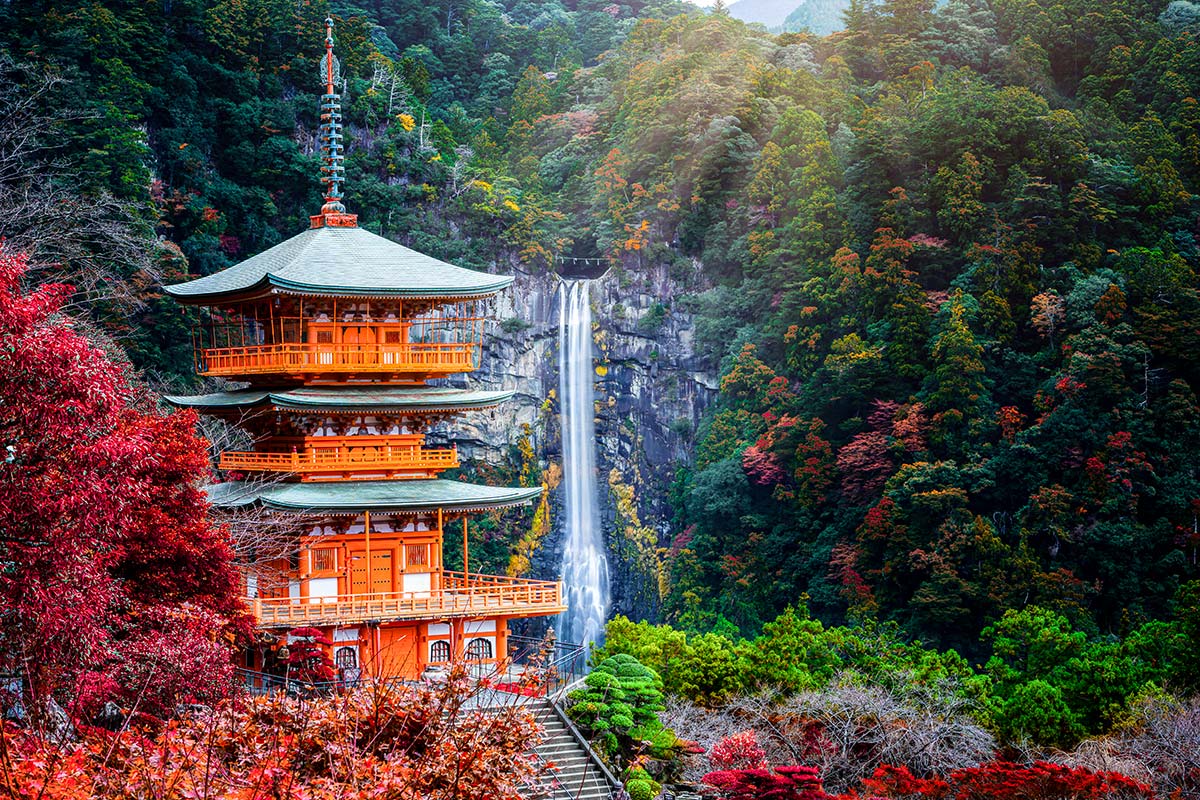
WT’s Guided Kumano Kodo Journey
While the Kumano Kodo is a wonderful pilgrimage to take on your own, walking with experienced guides enhances the journey dramatically. Wilderness Travel’s Japan: Hiking the Kumano Kodo to Kyoto trip is one of the best ways to explore these sacred trails. The trip combines the best and most scenic portions of the Nakahechi and Iseji routes, bringing pilgrims along the coast and into the mountains, with sacred stops along the way. Trip highlights include:
- Expert guides providing historical and cultural insight at different stops
- Carefully chosen ryokans and western-style hotels near the Kumano Kodo
- Seamless logistics and luggage transfers handled for you so you hike with just a daypack
- A balanced itinerary that includes cultural delights in Kyoto
If you’re looking for the quintessential Kumano pilgrimage experience, this journey has it all. And for those looking to add to their experience, learn more about how the Kumano Kodo compares to the Camino de Santiago—they’re the only two pilgrimage routes designated as UNESCO World Heritage Sites.
Frequently Asked Questions
The most popular Kumano Kodo route is the Nakahechi Route because of its accessibility and historical significance. The well-marked trail is about 40 miles long and was used by emperors and nobles in the 10th century.
Depending on your route, you need at least 3 to 5 days to walk the Kumano Kodo. Most travelers walk key sections in 3 to 5 days, though longer itineraries are possible and common. Some routes require 7 days or more.
Beginners can walk the Kumano Kodo as long as they have a reasonable level of fitness and have prepared appropriately. The Nakahecki Route is the best for beginners as it’s the most accessible, though it has some steep and strenuous sections that you should be prepared for.
The best months for the Kumano Kodo are the spring and fall months of March, April, May, October, and November. The weather is comfortable and temperate during these months as you avoid the heat of summer and the occasional icy conditions of winter. Note that spring and fall are the most popular times to hike the Kumano Kodo, so book accommodations in advance.
The Kumano Kodo is doable as a self-guided hike, especially on the more accessible and well-marked Nakahechi Route. Walking the pilgrimage trail with a guide, however, gives you a smoother experience as you won’t have to coordinate logistics.

September 9, 2026


June 23, 2026