

What to Expect on a Guided Camino de Santiago Tour
Wilderness Travel has guided el Camino tours for three decades. If you’re deciding whether to walk the pilgrimage with a guided trip or on your own, read on for details about a guided Camino walking tour.
Text and photos by WT Area Specialist Clara Richmond
The Camino de Santiago is one of the most well-known and iconic pilgrimages in the world. It’s a network of ancient trails leading to Santiago de Compostela in Spain, where the body of St. James the Apostle is believed to be buried. One of the most popular routes, the Camino Frances or “French Way,” begins in Saint-Jean-Pied-de-Port, France, and stretches nearly 800 kilometers, taking around four weeks to walk. Wilderness Travel’s Pilgrim’s Way: El Camino de Santiago offers a condensed yet immersive version of an el Camino tour, highlighting some of the most beautiful sections over nine days. I had the opportunity to join one of the departures in September, when the weather was mild and the harvest season highlighted exceptional cuisine.
What Are the Benefits of a Guided El Camino Tour?

It is entirely possible to hike the Camino de Santiago on your own due to the number of routes and pilgrim-friendly accommodations. In fact, nearly 500,000 solo-traveling pilgrims received their Compostela (certificate of completion) in 2023. But if you want to immerse yourself in the heritage and history of el Camino de Santiago in a week-long journey, a guided tour is by far the best option. Having a guide and driver brings you to the best portions of the Camino de Santiago and takes care of all the planning so you can fully savor every moment during the journey. Our amazing Trip Leaders were true experts on the trail and our driver was always kindly waiting for us with water or snacks if needed. They knew exactly when and where to join each section to avoid the more crowded areas.
A Week on El Camino de Santiago: What It’s Like
Our journey began in Burgos and ended in Finisterre, the legendary “end of the world.” The first two days were spent exploring the Gothic cathedrals of Burgos and León, where we received the first of many stamps in our pilgrim passports.


In the afternoons, we hiked through freshly cut golden hills and winding vineyards that were busy during harvest season. The deep blue sky was a dramatic contrast against the landscape, and the crisp September weather made this month one of the best times to hike the Camino.

Our route brought us to some of the most iconic stretches of the Camino, including Cruz de Ferro, the highest point on the Camino, on Day 3. We all placed a small stone brought from home at the foot of the cross, participating in the tradition of leaving behind a burden, wish, or intention.


As we entered Galicia on Day 4, the landscape shifted from open farmland to lush green forests bordered by stone walls. We were greeted by the sound of bagpipes in the mountain village of O Cebreiro, a reminder of Galicia’s Celtic roots. Our longest hiking day took place on Day 5, where we hiked 14 miles from Sarria to Portomarín.

Many pilgrims begin their journey in Sarria to complete the final 100 kilometers to Santiago, and we shared the trail with travelers from all over the world over the next couple days. We were lucky to have only one day of rain as we hiked into Portomarín.


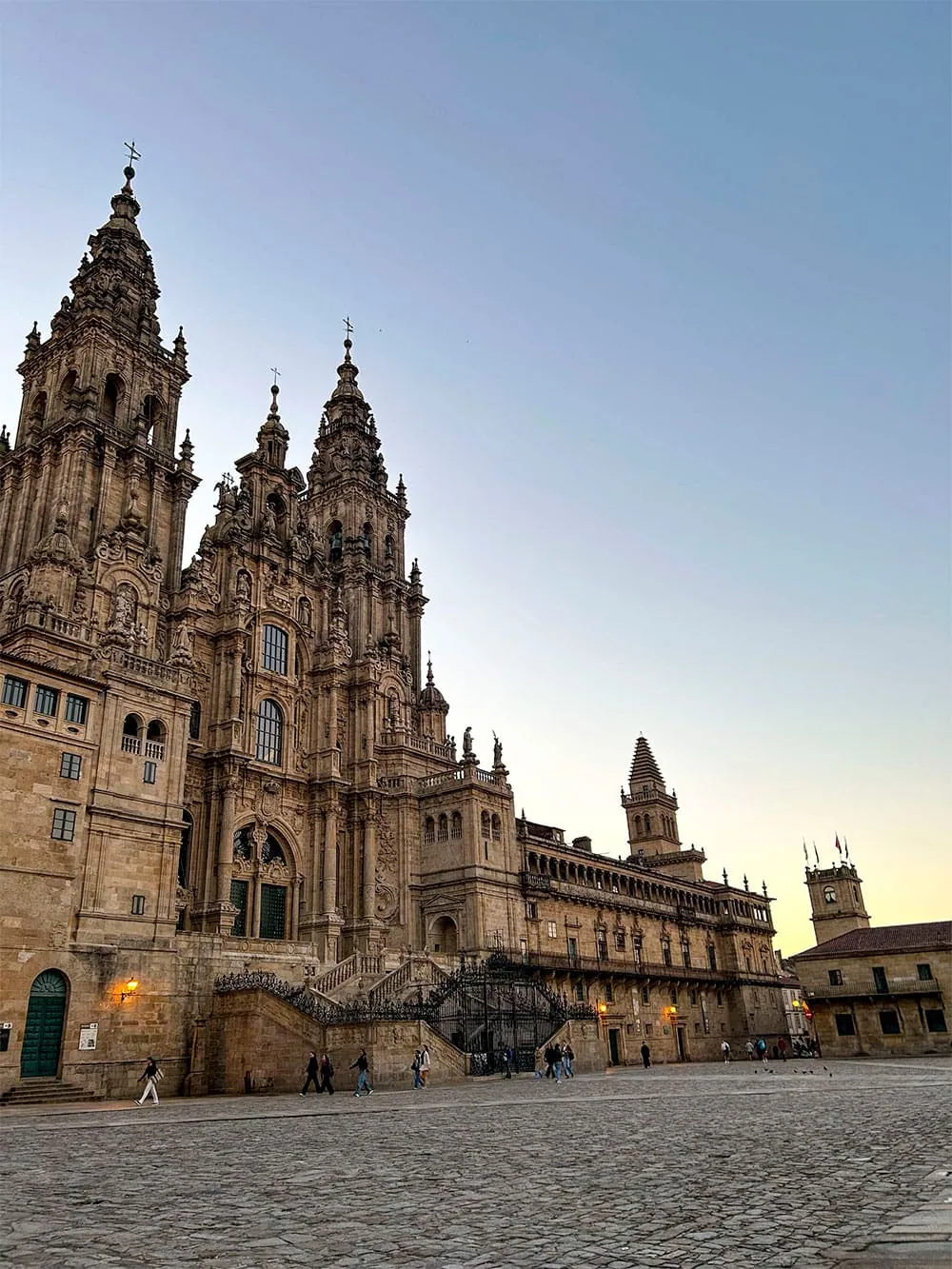
On Day 7, we arrived in one of Spain’s most stunning cities, Santiago de Compostela. Our hotel, the Parador de Santiago de Compostela, is located on the Plaza del Obradoiro, right next to the Cathedral of Santiago.
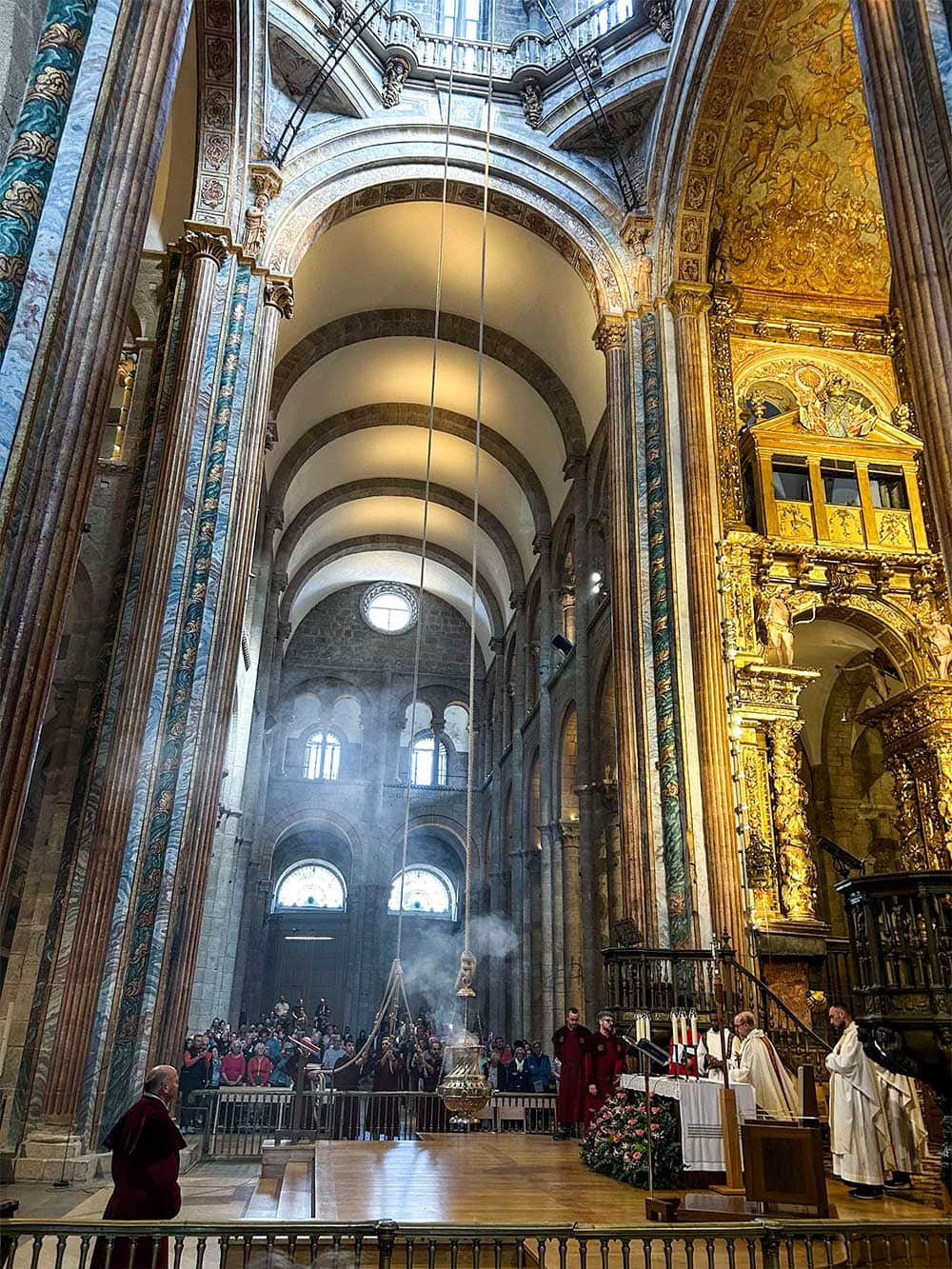
We were fortunate to see the Botafumeiro incense ceremony during Mass, which is truly an unforgettable experience.

On our final day as a group, we drove to the coast to visit the Finisterre Lighthouse and walk along Finisterre beach dotted with scallop shells, the pilgrim symbol that is synonymous with el Camino.
What to Expect on a Camino de Santiago Guided Tour?
If you are joining Wilderness Travel’s Camino de Santiago adventure, you can expect a typical day on the Camino to include balanced mix of city walks, hikes through mountains, tours in cathedrals, and other stops along the trail.

How many hours a day will I hike?
In the morning, we tend to take advantage of the cooler weather and will hike an hour or two until a trailside snack and coffee break and then continue a couple more until lunch. After lunch, we tend to walk an hour or two more, and arrive at our next hotel before dinner. Our first couple days are the shortest (1.5-3 hours each day), and include a mix of walks in Burgos and León. Day 5 is the longest on the trail (14 miles, 7-8 hours) and is a typical day for pilgrims who are hiking the entire Camino.

What are the accommodations and food like?
Our accommodations along the way were full of character and country charm, from restored monasteries to traditional manor houses and Paradors. The food was equally memorable, featuring local cheeses, meats, and regional specialties and wine from the villages we passed through.

What should I pack?
Packing for the Camino de Santiago is similar to other European hiking tours. Bring a mix of hiking and city wear, along with comfortable shoes. Whether you prefer hiking boots with ankle support or trail running shoes, just keep in mind that some portions of the trail are over uneven terrain and loose rocks. And don’t forget to bring a rock from home to leave at the Cruz de Ferro. No Camino journey would be complete without a scallop shell, but don’t worry—on a WT trip, you’ll be given a shell at the beginning of the tour and your guide will explain the importance of the shell throughout the journey.
Frequently Asked Questions
While a guide is not necessary to walk the Camino, a guided Camino tour is preferable for some. A small-group el Camino tour like WT’s shortens the length of your hiking days for those who aren’t able to walk the entire route end to end. However, you don’t need a guide to walk the Camino—trails are well marked, and helpful travelers are plenty.
Whether or not you should choose a guided tour of the Camino depends on what you’re looking to get out of the experience. A guided tour will show you the Camino’s highlights at a more relaxed pace than you would travel at on your own, and you’ll have access to a support vehicle if needed. A guided tour also streamlines the process of booking hotels and restaurants, so you can spend more time enjoying your pilgrimage. But most travelers opt to walk the Camino alone, self-guiding, reflecting, and meeting other pilgrims along the way.
You should be able to walk 12 to 14 miles a day for at least a week straight to be fit enough to walk the Camino as a solo traveler—so you need a high level of fitness. However, our trip requires a moderate level of fitness. We walk on average 8 miles daily, and you should be comfortable being on your feet for 6 to 8 hours per day. On our challenge day we hike 14 miles. We encourage you to train for your trip by walking and hiking long distances in the months and weeks leading up to your departure.
If a solo traveler walks the entire Camino, starting in places like Saint-Jean-Pied-de-Port, France, or Sarria, Spain (the two most popular starting points), they must complete around 12 to 16 miles per day on foot, which usually takes around 5 to 8 hours per day. On WT’s el Camino tour, we walk an average of 8 miles per day, which we complete in 4 to 6 hours a day.


