

Spotting Jaguars in Brazil: A Journey Through the Pantanal
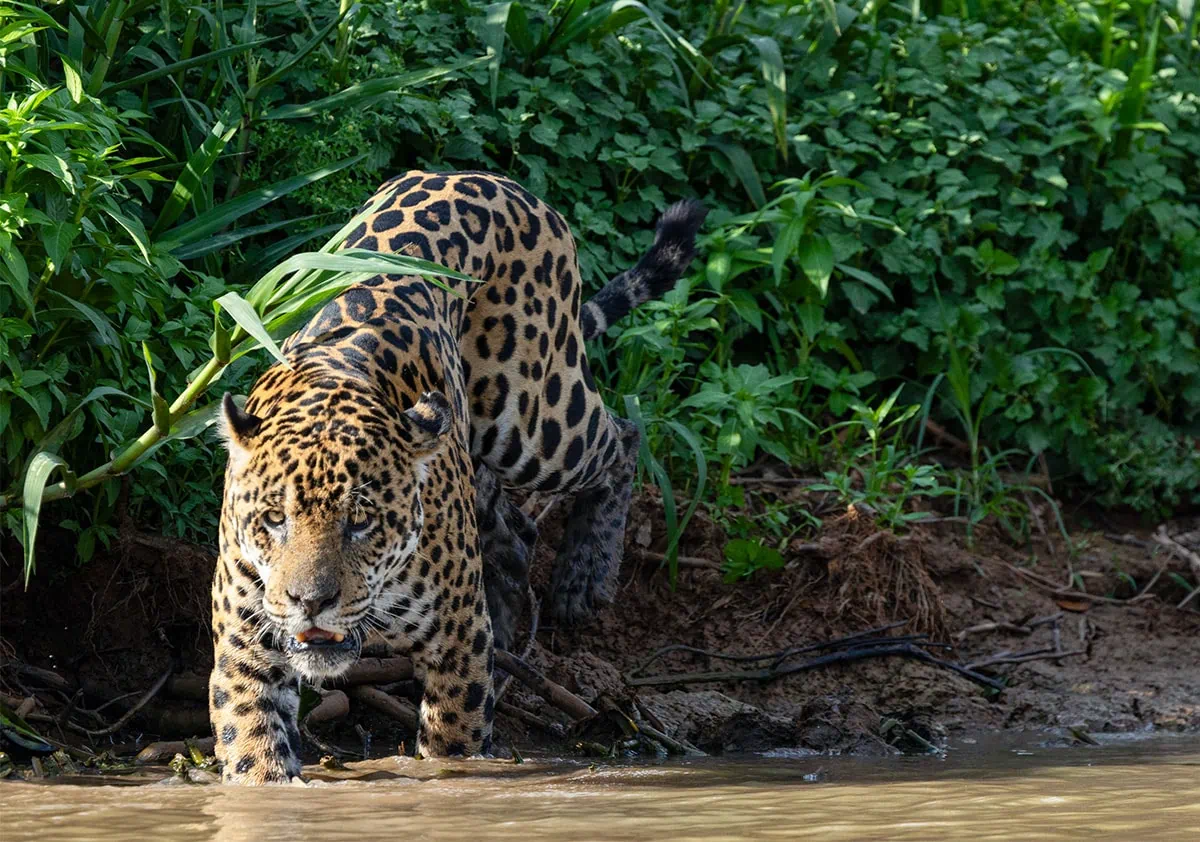
The Pantanal in Brazil, the world’s largest tropical wetland area, feels like a dream you never want to wake up from. It’s wild, magical, and absolutely brimming with life. It stretches across roughly 75,000 square miles, lying primarily in Brazil’s Mato Grosso do Sul, south of the Amazon, and spilling into Mato Grosso as well as parts of Bolivia and Paraguay. It’s also one of the best places in the world to see jaguars.
What makes this place so special is its astonishing density of wildlife. It’s a place where jaguars lounge along riverbanks, hyacinth macaws flash magnificent blue feathers against the sky, and giant river otters patrol the waterways, searching for their next meal. In the dry season, receding lagoons pull wildlife into dense gatherings, offering some of the most impressive wildlife sightings in South America. When the rains arrive, the region shifts into a broad expanse of flooded plains, creating beautiful reflections on the water and making every sunrise and sunset a work of art.
I had the privilege of taking a Pantanal wildlife tour in October, and the weather was perfect and the wildlife encounters remarkable. I met with researchers from the Jaguar Identification Project, looked for fauna like giant anteaters, capybaras, and spoonbills, relaxed at remote jungle lodges, and, of course, saw lots of jaguars. For someone passionate about conservation, the trip was unforgettable.
How to Spot Jaguars on a Wildlife Trip in the Pantanal

Jaguars can be found in the Pantanal, the Amazon, Costa Rica, Mexico’s Yucatán Peninsula, parts of Argentina and Bolivia, and even the southwestern US. They’re famously elusive, solitary hunters, meeting only briefly to mate. Yet in the Pantanal, everything we thought we knew about jaguars was turned upside down.

With abundant resources, jaguar numbers are high in the Pantanal, with estimated numbers between 4,000 and 7,000, and each recorded individual has a name and a personality. You’ll find the most jaguars in the northern Pantanal—specifically the Porto Jofre area. Here, jaguars display behaviors rarely seen elsewhere: swimming, diving, and ambushing aquatic prey like caimans and fish, tolerating neighbors because of resource abundance, and hunting in trees and water.
When you travel to the Pantanal in Brazil, the best way to see jaguars is with experienced guides who know the animals’ territories and behaviors. You’ll often spot them along riverbanks or near lagoons where they hunt and drink. Jaguars here are both powerful and graceful, and they embody the untamed spirit of the Pantanal. Watching these apex predators in their natural wetland habitat is a rare, once-in-a-lifetime experience.
The Best Time to See Jaguars in the Pantanal

The dry season, from July to October, is the best time of year to spot jaguars in Brazil. As the rains dry up, shrinking water sources concentrate prey and make sightings more frequent. The thinner vegetation of the dry season makes for better photo opportunities, and lower water levels also mean less mosquitos and lower water levels for more land-based safari drives. The peak months to visit the Pantanal are typically August, September, and early October.
The Jaguar ID Project: Conservation in the Pantanal

The Jaguar Identification Project is a conservation initiative focused on protecting jaguars in the northern Pantanal, particularly around Porto Jofre, Brazil. It identifies individual jaguars using their unique spot patterns, which are similar to human fingerprints, and by collecting data through photos from tourists, guides, and researchers, as well as camera traps placed in remote areas. This information allows the team to track Brazil jaguars’ movements, behavior, territories, and interactions over time. Beyond research, the project engages local communities and visitors to raise awareness, encourage coexistence with ranchers, and promote responsible ecotourism.
At Wilderness Travel, we are committed to supporting the communities and ecosystems that make our trips possible, which is why we partner with Jaguar ID Project on our Brazil: Jaguars & Wildlife of the Pantanal trip. Travelers meet a researcher from the Jaguar Identification Project who gives an in‑depth presentation on the organization’s work in the Pantanal and even introduces some of the individual big cats by name. Travelers can contribute to research by submitting photos taken during their trip to Jaguar ID directly, and by contributing an optional donation added to Brazil travelers’ final invoices.
Other Wildlife You Can Expect in the Pantanal

Beyond jaguars, the Pantanal is home to a variety of mammals, birds, and reptiles. Capybaras gather along riverbanks in family groups, while marsh deer, peccaries, and giant anteaters roam the grasslands. More elusive animals, like ocelots and pumas, slink along riverbanks and in the dense forests, while smaller creatures such as frogs, butterflies, and insects also play important roles in the ecosystem.


The Pantanal in Brazil is also a birdwatcher’s paradise, with over 650 species recorded, including hyacinth macaws, roseate spoonbills, jabirus, and kingfishers. Seasonal lagoons (or “lagoas”) attract large flocks of shorebirds, while rivers and ponds are home to caimans, turtles, giant otters, and a variety of colorful fish. Whether on a boat safari, jeep ride, or walk, travelers have the chance to see this remarkable diversity up close.
What Does a Day on a Pantanal Wildlife Safari Look Like?

In October, I had the privilege of exploring a condensed version of our current Pantanal itinerary. A Brazil wildlife tour had always been on my travel list, but I never imagined I would encounter jaguars and such an incredible abundance of wildlife up close.
A day on a Pantanal wildlife safari starts early, often with the sounds of howler monkeys and an explosion of bird songs to break the silence of a quiet morning. After a quick coffee at your lodge, you head out by boat or safari vehicle to explore rivers, lagoons, and open wetlands where capybaras, caimans, and countless birds are already active. Jaguars aren’t the biggest fans of cold mornings (and neither am I, so I don’t blame them!), but there is always a chance that a jaguar might appear along the riverbank if conditions are right. Jaguars hunt around the clock, so you always have a chance of seeing them in action.

Midday is quieter and hotter, giving you time to return to the lodge for lunch and a break while the landscape settles into late afternoon. By about 4:00 pm, the temperatures cool, and wildlife activity picks back up. You’re back out in the field via boat or safari vehicle as hyacinth macaws, giant anteaters, and Jabiru storks become more visible in the softer sunshine, and jaguars are on the move, stalking through the brush.
After sunset, night safaris offer a completely different view of the Pantanal, with chances to spot ocelots, foxes, and the shining eyes of caimans along the water’s edge. My favorite part of the night drives was watching thunderstorms roll in from the distance as you search for wildlife.
Pantanal safaris are the kind of experience words can’t quite do justice; you really have to witness it to understand how extraordinary it is! The moving experience of seeing a jaguar in its natural habitat was a moment I’ll never forget.
Frequently Asked Questions
Brazil is home to a significant population of jaguars, especially in the Pantanal wetlands and the Amazon rainforest. Jaguar numbers in the Pantanal are estimated between 4,000 and 7,000.
Jaguars are elusive and solitary, so sightings are rare in most areas. But the Pantanal is one of the few places where spotting them is relatively common.
The Pantanal is famous for being the world’s largest tropical wetland. And it’s not just one of the best places in Brazil to see jaguars—it’s one of the jaguar hotspots of the world. It also has a wide diversity of other wildlife like capybaras, giant anteaters, and hyacinth macaws.
The dry season, from July to October, is the best time to see jaguars in the Pantanal, as shrinking water sources concentrate prey and make the big cats easier to spot.
Jaguars are legally protected in Brazil, and conservation efforts, including national parks and research projects like the Jaguar ID Project, help safeguard their populations and habitats.


December 9, 2025
