

A Beginner’s Guide to England’s Coast to Coast Walk
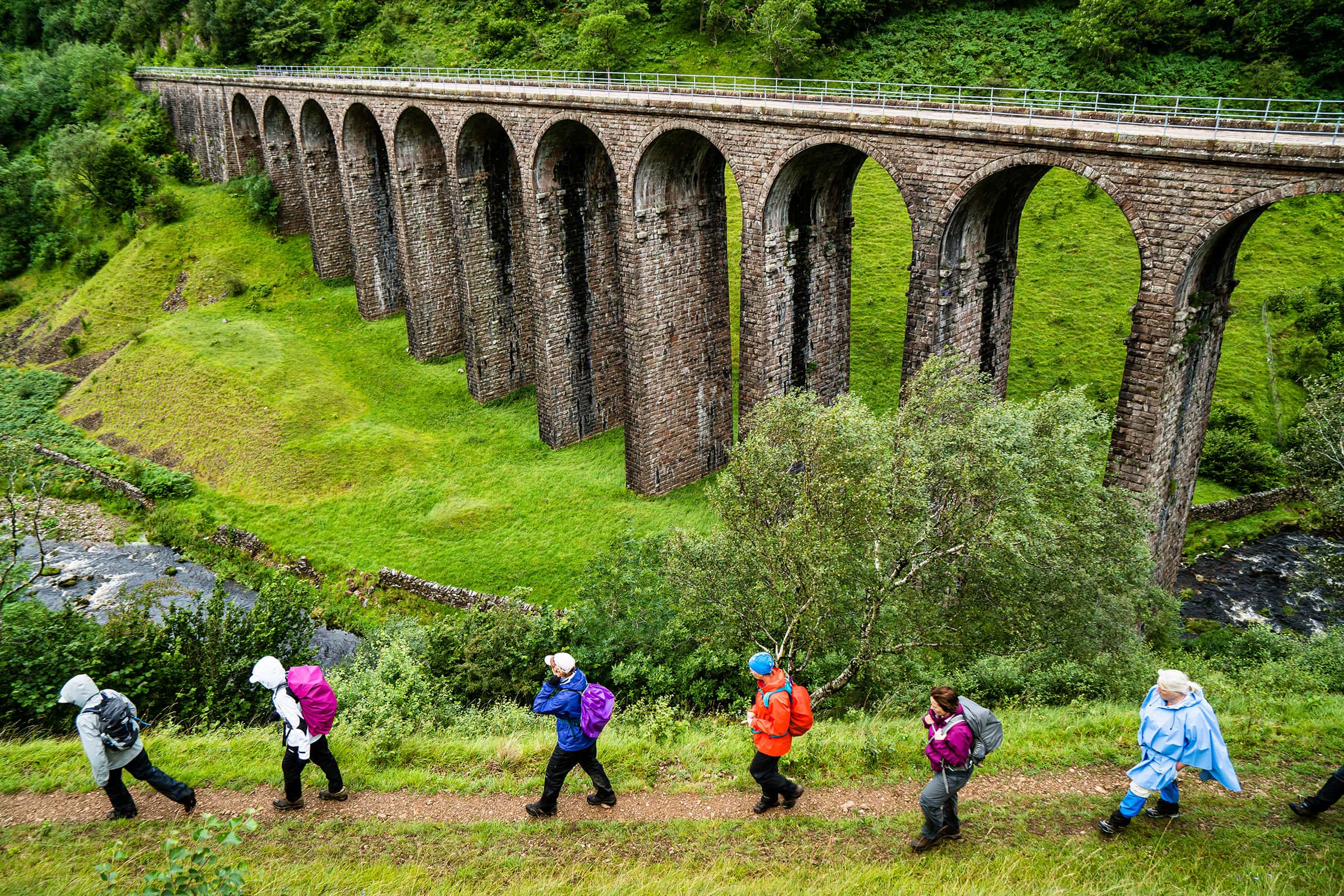
Your Ultimate First-Time Guide to Hiking England’s Coast to Coast Walk
When British guidebook author Alfred Wainwright first explored England’s Lake District in the 1930s, he fell in love with the region’s evocative landscapes. As the country’s most celebrated fellwalker—a British term meaning someone who enjoys traversing highlands—he spent decades returning to northern England’s hills, moors, and mountains.
In the 1970s, he decided to put his knowledge of the region to use: charting a 190-mile path from the Irish Sea to the North Sea that connected existing forest trails, gravel and stone pathways, and country roads. He organized the route into 12 stages, connecting the district’s charming villages and stunning wilderness, and making it possible to find a place to stay at the end of each day’s ramble. Today, this route is known as England’s Coast to Coast Walk.
While the path itself has changed little since Wainwright published his guidebook, how the Coast to Coast Walk features in the public’s imagination certainly has. It gained National Trail status in 2022, and today attracts thousands of trekkers every year. Even still, it’s possible to relish in the rural solitude that Wainwright was able to enjoy.
The route traverses three national parks: the Lake District, land of the writer Beatrix Potter, with its rocky terrain and upland pools; the Yorkshire Dales, where rolling green hills and pastoral valleys look straight out of a Jane Austen novel; and North York Moors, with its heather moorland and magnificent seaside cliffs.
The Coast to Coast path stretches from Saint Bees, a village on the western seaboard, to Robin Hood’s Bay, on the east coast. It’s designed to take 12 to 14 days, with an average daily mileage of 12 to 16. From bed-and-breakfasts to campsites, accommodation is widely available thanks to the walk’s popularity.
But for a truly immersive experience, join one of WT’s spring, summer, or fall departures of our guided Coast to Coast trip. With the insight of our local guides, WT’s carefully curated route averages six to eight miles a day for 12 days. We do the hike from west to east, putting the prevailing wind at our backs. And embrace the best of what this spectacular region has on offer: staying at welcoming inns, visiting stone-built villages, and savoring a pint or two at friendly rural pubs.
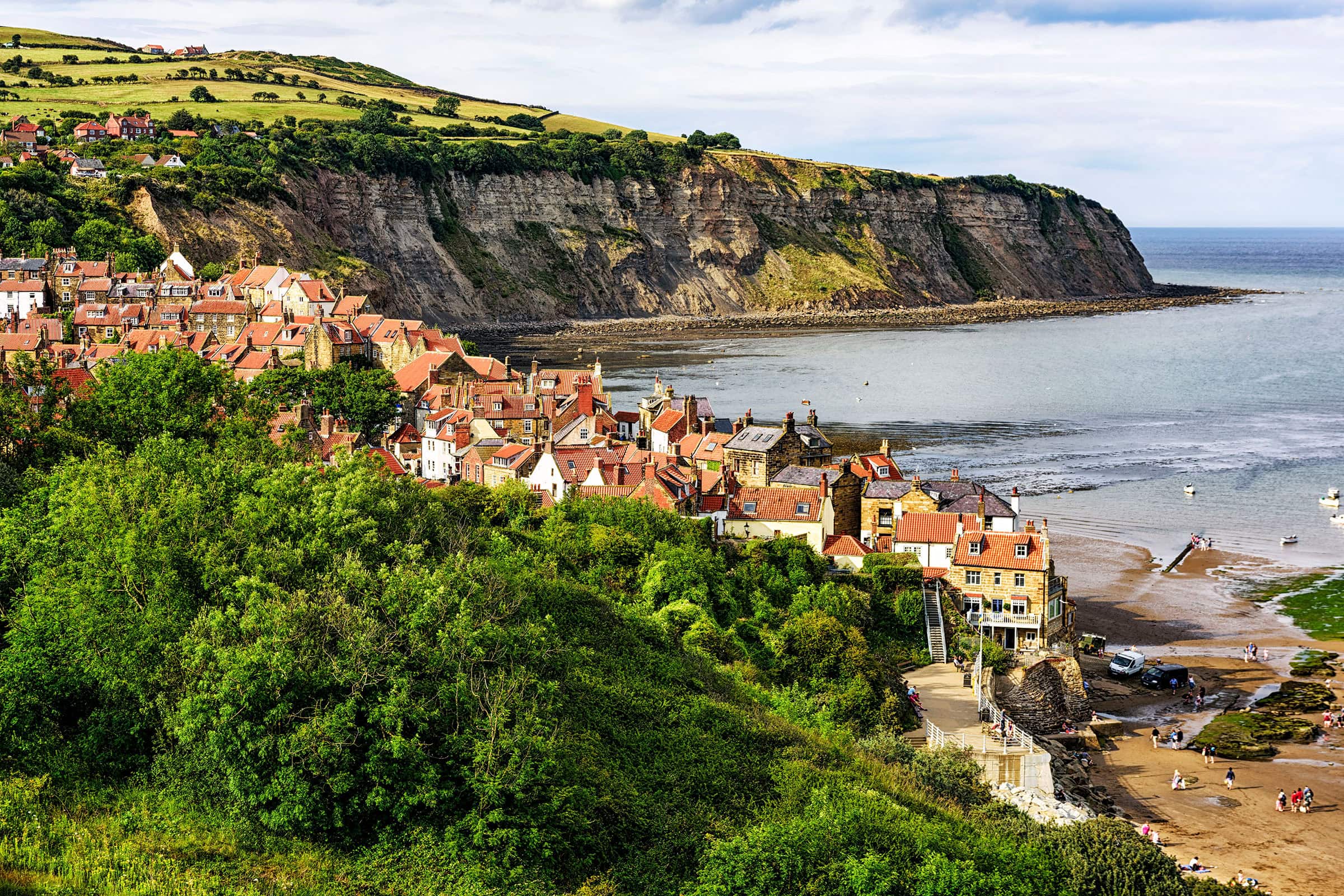
What is the Coast to Coast Walk in England?
There’s probably no person more responsible for making the English hobby of rambling a popular pastime than the celebrated guidebook author Alfred Wainwright. He’s also responsible for turning the Coast to Coast Walk from a series of existing footpaths into one of England’s most beloved trails.
After establishing a deep appreciation for the Lake District, he began mapping out a way to connect public paths, tracks, and roads that would bring out the best of the region, a route he published in a 1973 book that’s since become a classic read among long-distance hikers. Since then, England’s Coast to Coast Walk has become one of the most popular long walks in the UK and gained National Trail status.

Where Does England’s Coast to Coast Walk Start and End?
England’s Coast to Coast Walk starts in Saint Bees, a charming coastal village on the western seaboard. The construction of a railway in the mid-1800s turned Saint Bees into a popular getaway for the residents along the Cumbrian Coast, as it remains today.
Visitors to Saint Bees come for its quaint sandstone buildings, vast bird reserve (home to one of the largest colonies of sea birds in the country), and a mile-long beach—considered one of the most scenic in the Western Lake District—that’s where the Coast to Coast Walk begins.
Robin Hood’s Bay, on England’s east coast, is where the Coast to Coast Walk ends. A Yorkshire fishing village on the border of North York Moors National Park, Robin Hood’s Bay is a destination in its own right, attracting visitors in the summer for its sandy beaches and rock pools filled with fossils. The village is the picture of seaside English charm, with cobblestone streets, plenty of cafes and pubs, and historic cottages that cling to the cliffsides.


When is the Best Time of Year for the Coast to Coast Walk?
Other than the cold and dreary winter months, the Coast to Coast trail features spectacular seasonal highlights throughout the year, which is why WT hosts departures from May to October. The best month to hike England’s Coast to Coast trail depends on what you’re looking for.
Walk the path during spring for landscapes blanketed in wildflowers, daytime average temperatures in the mid 40sF, and sleepy villages emerging from winter. Go during peak summer for sunny days in the high 50s to high 60s, and, in late August or early September, to see the heather of the moorlands bloom purple. In the fall, experience quieter trails (though the path never gets too busy), wondrous foliage, days in the mid 50s, and village harvests.
The Coast to Coast Walk traverses the north of England, where lush landscapes are fed by perennial rainfall no matter the time of year. While you can expect at least a few days of rain any season, the drier summer months, one of the best times to visit England, will make walking the path more pleasant and manageable, and offer the greater probability of a few bluebird days.

How to Train and Prepare for Your Coast to Coast Walk
According to WT’s grading system, the Coast to Coast Walk is rated 4-plus, or moderate to strenuous. While you don’t need to be an advanced hiker—the average day covers six to eight miles with 1,000 to 1,500 feet of elevation gain/loss—certain parts can be challenging.
We get that out of the way during the first few days in the Lake District, where the most demanding day will have us trekking 11 miles over 6.5 hours with more than 2,000 feet of elevation gain. The terrain can be rugged, with steep climbs over uneven ground, boggy terrain, open fells, and craggy rocks.
The best way to prepare for the Coast to Coast Walk is simply by going on day hikes that share similar characteristics in length and terrain. Just as will be the case when you trek with WT, a light day pack is all you’ll need—our trip shuttles your luggage to each days’ endpoint. In the event of overexertion, our transport van allows travelers to skip a day’s hike and travel to the next destination to rest up.
Other cardiovascular exercises, including running, swimming, and cycling, will also prepare you for two weeks on the trail, as will working out on stair-climbing machines. Your feet should also be well prepared—make sure your hiking boots are sturdy, comfortable, and thoroughly broken-in.


Where to Stay Along the Coast to Coast Walk
As one of England’s most popular long-distance paths—and one that’s been established for more than half a century—there are plenty of lodging options along the Coast to Coast Walk, from pubs and bed-and-breakfasts to hostels and campsites. It’s best to book accommodations in advance, especially during peak summer months, though if you’re looking to camp, it’s possible to stay as you go. If you travel with WT, expect to lodge in quaint and comfortable hotels that have been selected by our local trip leaders for their local history and charm.
What Are the Best Places to Stay at Each Stage?
- Sella Park Country House Hotel: This beautiful stay is at the foot of the Western Lake District fells.
- Hotel Skiddaw: Set in the picturesque market town of Keswick, this hotel has a great location on the main square, with its own restaurant and plenty of pubs within walking distance.
- Macdonald Leeming House: This elegant Georgian mansion, built more than 200 years ago, sits on 22 acres of lovely gardens that lead to the shores of Ullswater Lake. Guest rooms feature traditional décor with old-world charm and the onsite restaurant offers contemporary, yet classic British cuisine.
- Appleby Manor: This welcoming country house hotel has all the requisites for a relaxing stay: warm open log fires, comfortable bedrooms, a fine restaurant, and views overlooking the green fells of the Lake District. It’s noted for its spa offering rejuvenating treatments. If you have a little time, take a break in the hydrotherapy pool, sauna, or steam room.
- Easby Hall: You’ll feel like a guest in a friend’s comfortable home at this lovingly restored Georgian country house—and we have it all to ourselves! It’s a tranquil retreat overlooking the ruins of Easby Abbey, and offers three distinctly different gardens in which to stroll. And don’t skip the bountiful breakfast—it’s outstanding.
- Gisborough Hall: Set on the edge of the North York Moors, this Victorian country house hotel is a wonderful retreat with spacious, well-appointed rooms and a most friendly staff. And don’t miss the full English breakfast!

What to Pack for the Coast to Coast Walk
England is known for its changeable weather—clear, sunny skies often yield to rain showers at a moment’s notice, and vice versa. When packing for walking trips in England, prepare for cold rain, persistent fog, mist—and beautiful weather (that means sunscreen!). Create a layering system that takes you from shorts to warm rain gear. The at-times rugged terrain is easier tackled with trekking poles and definitely requires sturdy, broken-in hiking boots. Embarking on the Coast to Coast Path with WT means you’ll only have to carry a daypack filled with essentials—rain gear, sweater, camera, water bottle—as our van will transport the group’s luggage from one destination to the next!
Should You Go with a Guided Group or Self-Guide Your Coast to Coast Walk?
You’ll find benefits to both guided and solo trips of the Coast to Coast Walk. A guided small group trip will organize all the logistics for you, and give you insight and cultural context afforded by local guides. A solo trip, on the other hand, allows you to pace your journey however you’d like, and embrace the route’s solitude—honoring Wainwright’s vision of hiking in quiet splendor.

Why Join a Guided Group?
- Enjoy the incredible camaraderie—and local knowledge—of your guides. It’s one thing to admire an incredible place and another entirely to immerse yourself in it. WT’s guides, many of whom grew up in northern England and have a great love for this region, are not only full of knowledge, but are also storytellers at heart.
- Leave your weight (and worries!) behind. Our van will transport the group’s luggage, so you only need to carry a daypack for items you need for the day (rain gear, sweater, camera, water bottle, etc.).
- Don’t fret about logistics. Simply enjoy the beautiful setting and be in the moment! As England’s Coast to Coast Walk has become more popular, the most desired properties along the route can get booked up early. WT selects properties based on their local history and charm—and makes the arrangements for you.
- Embrace flexibility. With WT, you do not hike every inch of the trail from one coast to the other—this is not a purist trip following every mile. The itinerary is adjusted by the Trip Leader’s knowledge and by weather conditions. A day of rain may make one route more desirable than another, for both safety and comfort.
- Skipping a day is no problem. Trip members are always free to skip a day’s hike and travel to the next destination in the support vehicle (or remain at the hotel if we are not transferring that day).

Why Go For a Self-Guided Walk?
- Go at your own pace. There’s something freeing about walking at your own speed and changing plans at the last minute if necessary.
- Bask in the route’s solitude. Alfred Wainwright crafted the route to avoid urban areas and bring quiet splendor to its trekkers—embrace this vision by going solo.
- Embrace the route’s camp life. It’s possible to experience the Coast to Coast Walk very affordably thanks to a wide network of campsites and hostels—though be sure to adjust your daily mileage to account for a heavier pack.
Frequently Asked Questions
Done end to end, the Coast to Coast Walk in England typically takes around 15 or 16 days to walk completely. This assumes a pace of around 12 miles per day. But no two days are the same—some days you might walk 8 miles, whiles others you might do 15. WT’s Coast to Coast takes a more relaxed pace to see the trail’s highlights, so you’ll walk around 6 to 8 miles a day.
Roughly an estimate 6,000 hike complete the entire Coast to Coast Walk every year. But millions more walk sections of the trail as day hikes throughout the year.
The Coast to Coast Walk is considered a difficult route, not recommended for beginner hikers. The terrain is often rugged and hilly, and some sections have few sign markers or nearby facilities. However, we label the WT Coast to Coast journey a Level 4+, meaning “moderate to strenuous.” Some hikes are steep and challenging, but you’ll need not worry about unmarked trails or sleeping arrangements on a guided trip.

Still Have Questions?
Our England Specialists are here to help you choose the perfect departure, prepare for your journey, and feel fully confident every step of the way. Contact us to get personalized recommendations and insider guidance.


