K2 and the Chinese Karakorum
Trek to Advance Base Camp on K2
Gary McCue
Repertory Trip: Next Offered August 23-September 16, 2013
Trip Details at-a-Glance
| Cost From: | $10,995 see pricing |
|---|---|
| Length: | 25 days |
| Arrive: | Beijing, China |
| Depart: | Beijing, China |
| Lodging: | 7 nights hotels, 17 nights camping |
| Meals: | All meals except 1 lunch included |
| Activity: | Hiking / Trekking |
| Trip Level: |
16-day trek on moderate to steep trails, 4-8 hours a day, altitudes between 3,000-15,350 feet
|
Highlights
- Remote and spectacular K2, 2nd highest mountain in the world
- Trek remote desert trails amid the majestic high peaks of the Karakorum
- Backpack expedition from K2 Base Camp to K2 Advance Base at 15,530 feet
- Kashgar, with its famous Sunday Bazaa
Choosing the Right Trip
We work hard to help you choose the right trip for you, paying attention to your individual interests, abilities, and needs. If you have questions about the level of comfort or any of the activities described in this itinerary, please contact us.
Email Area Manager
References
We are proud to have an exceptionally high rate of repeat travelers. For more information, we would be happy to put you in touch with a client who has traveled with us.
Email Area ManagerResources
Repertory Trip
This is one of our special Repertory Trips offered every two to five years. It will be several years before this journey is offered again. Now is the time to go!
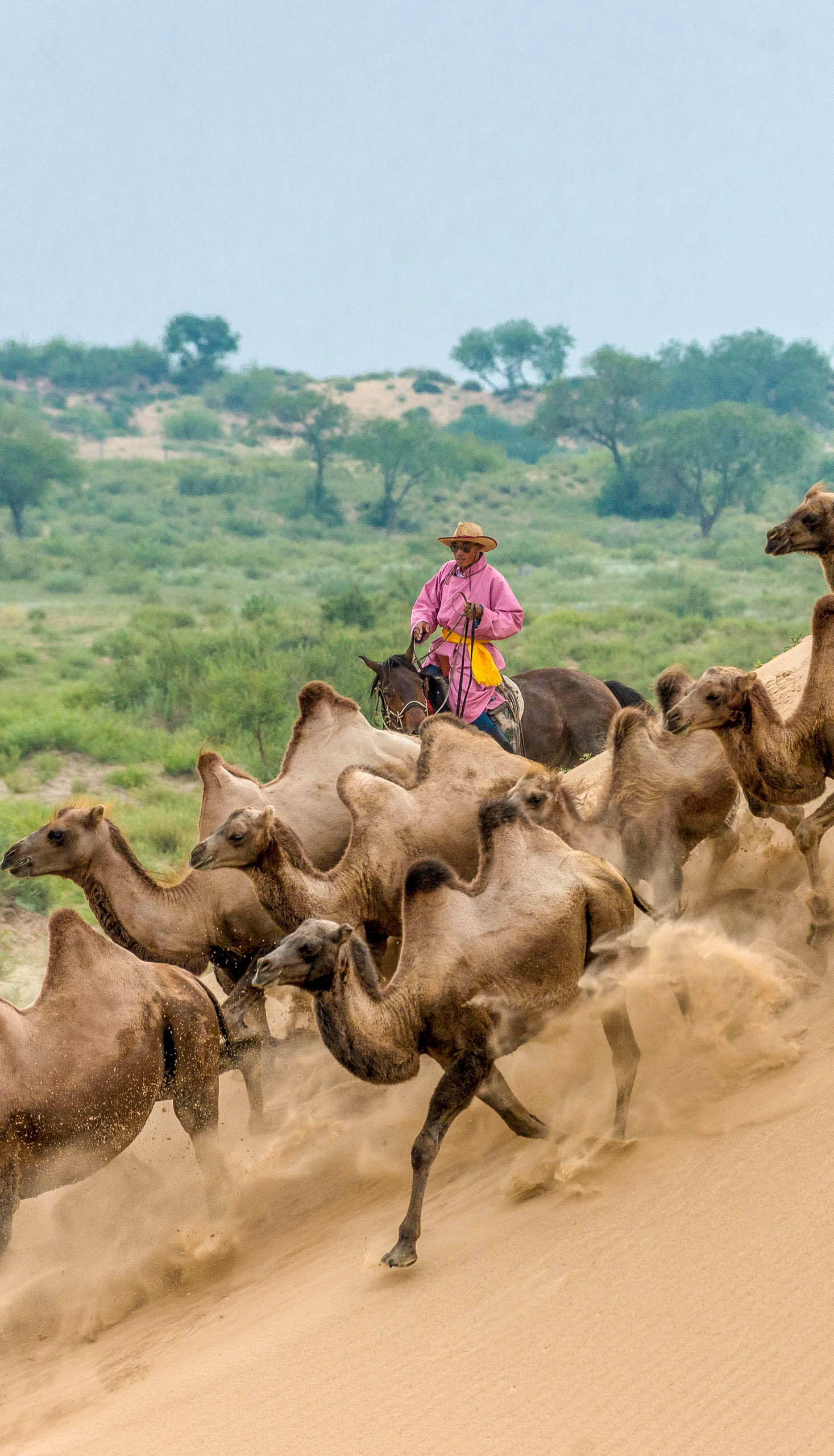
K2 (28,251'), the second highest mountain on earth, is a magnificent pyramid of rock and ice flanked by giants including Broad Peak (25,414'), Gasherbrum I (Hidden Peak; 26,444'), Gasherbrum II (26,358'), and a host of granite towers that are formidable summits in their own right. On this special WT Expedition with veteran Trip Leader Gary McCue, we approach K2 from the north by way of China’s great desert province of Xinjiang. Our 16-day trek is an incredibly spectacular journey following trails alongside the Yarkand and Shaksgam rivers, milky white with silt from the Karakoram’s mighty glaciers. As we make our way through dramatic mountain valleys, a caravan of shaggy, two-humped Bactrian camels carries our gear. At K2 Base Camp at 12,900 feet, we leave our camels behind and backpack to the Italian K2 Advance Base Camp (15,350’) on the K2 Glacier, a strenuous 4-day hike round-trip. We have an Exploration Day here to hike up through ice seracs toward the sprawling glacial amphitheater at 17,075 feet below K2’s immense North Face. It’s a strenuous trip but well worth it—join us for a rare chance to explore one of the greatest mountain sanctuaries in the world
Itinerary at a Glance
For a more complete description, Download Full Detailed Itinerary
Days 1-3
Beijing, China / Kashgar
We fly to Beijing, then on to Kashgar via Urumqi, the capital of China’s Xinjiang Province. Kashgar was once a fabled oasis on the Great Silk Route. We explore Kashgar’s photogenic Sunday marketplace, one of the largest in Central Asia.
Days 4-11
Yarkand / Trek to K2 Base Camp
We head up into the mountains to a Kyrgyz village at 11,500 feet. Meeting with our camel drivers, we hike along the Shaksgam River through a stunning desert canyon, cross Aghil Pass (15,825'), and descend into the Shaksgam Canyon. Our route turns higher as we ascend a ridge crest to 14,495 feet, enjoying impressive views of K2’s northern face as we hike further to K2 Base Camp (12,900'), a sprawling oasis of stunted willow trees in a broad plain adjacent to the terminus of the K2 Glacier
12-17
K2 Advance Base Camp
The camels cannot cross the moraine and ice of the K2 Glacier, so for this section of our trek porters carry our camping gear and food and we carry our own personal clothing, sleeping bag, and sleeping pad in a backpack. We hike up steep scree to K2 Advance Base Camp (15,350'), with an Exploration Day for hikes to the upper glacier and ice seracs.
18-25
K2 Base Camp / Kashgar / Beijing
We make the return hike back to K2 Base Camp and retrace our route over Aghil Pass and back to the trailhead. Drive to Yeching, then Kashgar, and fly home via Beijing on Day 25.
For a more complete description, Download Full Detailed Itinerary
What the Trip is Like
This trip is rated 7, Most Strenuous, according to our trip rating system. Most of the hiking is at altitudes between 12,000 and 15,825 feet en route to the K2 Base Camp, with rough trails winding through long stretches of river rock and soft sand along the rivers,. We hike on loose scree with no established trails when we ascend beside the glacier on moraine. On trek, the average hiking day will be 6-8 hours of trekking, with ascents and descents of up to 2,000 feet each day (cumulative 4,000 feet). There is one 15,800-foot pass to cross. Beyond the Italian Advance Base Camp, there is an optional ascent to 17,075 feet for spectacular views of K2.
On the four-day, three-night trek onto the K2 Glacier, you must be fit enough to carry a 20- to 30-pound pack at altitudes of 13,000 to 15,350 feet on the trek up to the Italian Advance Base Camp for two days and then for one day back to Sughet Jangal. The backpacking section will be very strenuous due to the altitude as well as the fact that we are crossing hills of loose glacial moraine. You should have previous backpacking experience. There is no climbing involved, but glacier walking involves hiking over jumbled, uneven layers of pebbles and rock debris and sometimes on areas covered with snow. Crampons and ice axes are not necessary but your boots should have excellent tread on them. Please Note: Everyone will be expected to double up in tents for the three nights we go up the glacier, and each trekker will need to carry all his or her personal clothing, sleeping bag, and a light sleeping pad for the three nights on the glacier.
Every participant must understand that this trek is truly challenging—you should be in excellent physical condition. To prepare for this trek, we recommend that you go on an all-day strenuous hike every weekend for at least three months prior to the trek, carrying a full pack to condition yourself for the rigors of this trek. In addition, you should go on an overnight backpack trip at least once each month for the three months prior to the trek. This will familiarize you with your pack and help you learn what essential clothing to carry and what luxury items can be left behind to conserve weight.
There are occasional fast-moving streams to ford or hop over by wading or jumping from rock to rock, which requires some agility and good sense. For the wide river crossings, we will ride on the camels. During the day, we should have sunny skies and fairly pleasant temperatures. Nighttime temperatures will rarely drop below freezing, except during the three nights at high elevation when they may be as low as 20F. Rain is unlikely in this high desert region, but snow is a possibility while we're on the glacier.
ALTITUDE ACCLIMATIZATION
Please also note that individuals vary widely in both their physical response to high altitude and the ability to acclimatize and, since physical fitness does not confer any protection or facilitate acclimatization, it is impossible to predict how you will adapt to the altitude. The greatest protection is avoiding rapid ascents and allowing time for acclimatization. Your body can adapt to altitude if given time. We feel this itinerary specifically provides that option, but you must individually pace yourself to go slowly and drink plenty of water to avoid dehydration. Do not push too hard regardless of how physically fit you may be or feel.
Early symptoms of high altitude sickness include: headache, nausea, loss of appetite, sleeplessness, vomiting, dry cough, irregular breathing, shortness of breath, fatigue, swelling of ankles and eyelids. It is not uncommon to experience some of these symptoms when you first arrive at high altitude and then to have them decrease in severity within a few days. It is important that you inform your Trip Leader immediately of any symptoms or discomfort, however minor, so that they can help you monitor the situation. Please be aware that remaining at high altitude in spite of alarm signals from your body may result in serious illness or even death.
Medical conditions that are aggravated or complicated by high altitude include heart diseases, lung diseases, pregnancy, anemia, and sickle cell disease. It is imperative that anyone with any of these conditions consult their physician in detail before attempting this trekking expedition.
Departures & Leaders
This is one of our special Repertory Trips offered only every two to five years. This journey will not be offered again for several years. Now is the Time to Go!
Aug 23-Sep 16, 2013 Gary McCue
Trip Cost
Prices are for 2013
$10995 (9-12 members)
$11995 (7-8 members)
$12995 (5-6 members)
Single supplement: $600
Forced single supplement: $600
Internal airfare: $1175 (subject to change)
more on pricing
Trip Cost Includes:
- Expert leadership of a Wilderness Travel Trip Leader and local guides
- Services of guides and camp staff
- Accommodations as noted
- All meals except 1 lunch included
- All group camping and cooking equipment including dining, sleeping, and toilet tents
- Land transportation, airport transfers for passengers as noted
Trip Cost Does Not Include:
International airfare; airport departure taxes; any meals not specified after each itinerary day; optional tipping or gratuities to leaders or staff; hotels en route to/from Asia; any additional hotel nights that may be necessitated by international airline schedule changes or other factors; pre-trip expenses of medical immunizations, visa fees, travel insurance; and other expenses of a personal nature (alcoholic beverages, laundry, etc.).
Gary McCue
Gary McCue literally wrote the book on trekking in Tibet and he has pioneered some of our most amazing Himalayan expeditions, including the In the Footsteps of Heinrich Harrer, a trek that retraces the final stretch of the journey of Heinrich Harrer, author of the classic adventure Seven Years in Tibet, and The World's Highest Trek, which brings trekkers up as high as 21,000 feet on Mt. Everest. "I have a "trek philosophy" known as laid-back trekking (LBT). In a nutshell, it's based on how the slower you go (as long as you don't come into camp in the dark!), and the closer to the back of the trek group you are, the more often amazing things tend to happen. One can race along the trails anywhere in the world and have mostly a view of the toes of their boots, but if you slow it down, you can take in the incredible surroundings and really experience what attracted you to a region in the first place." Gary's strong connection to the Himalayan people opens many doors. He speaks Tibetan, lived in Nepal for many years, and now resides in the Blue Mountains outside Sydney, Australia.
Upcoming Trips:
K2 and the Chinese Karakorum, August 23-September 16, 2013
Tibet: The Ultimate Kham Trek, September 21-October 12, 2013
Ultimate Manaslu, March 30-April 28, 2014
In the Footsteps of Heinrich Harrer, June 2015
Khawa Karpo: The Sheep Year Pilgrimage, September 2015
Client Testimonials:
Gary is excellent in every way. It was an incredible experience.Terry C., New Albany, IN
Gary is the best. Everything you would want in a trip leader—knowledge, experience and fun.Randy R., Edgewater, MD
Gary is the most competent guide I have experienced. One would be hard pressed to find a more personable and knowledgeable individual in the trekking business.Scott S., Fresno, CA
Tibet: The World's Highest Trek
Gary is a gem. His vast knowledge of the area's history and culture, as well as his numerous contacts, all added immensely to the trip.Karl G., El Cerrito, CA
Hidden Kingdom of Mustang